INCITe
Researchers can see lifesaving potential in immunotherapy.
But right now, only 50% of patients with advanced melanoma, and 30% with advanced lymphoma, kidney, bladder and lung cancer, respond to immunotherapy.
And for those affected by breast, prostate and pancreatic cancer, the treatment is rarely effective.
Sam lost her mum to breast cancer, and when she was diagnosed with Stage 4 Colon cancer at age 28, she realised, "They didn't have treatments that were going to cure me."
Researchers can see lifesaving potential in immunotherapy
But right now, only 50% of patients with advanced melanoma, and 30% with advanced lymphoma, kidney, bladder and lung cancer, respond to immunotherapy.
And for those affected by breast, prostate and pancreatic cancer, the treatment is rarely effective.
Sam lost her mum to breast cancer, and when she was diagnosed with Stage 4 Colon cancer at age 28, she realised, "They didn't have treatments that were going to cure me."
How INCITe will change things
Thanks to the generosity of people like you, researchers at the ACRF Centre for Intravital Imaging of Niches for Cancer Immune Therapy (INCITe) Centre are beginning to unlock the full potential of this powerful treatment by answering a crucial question: why do some patients respond to immunotherapy, while others do not?
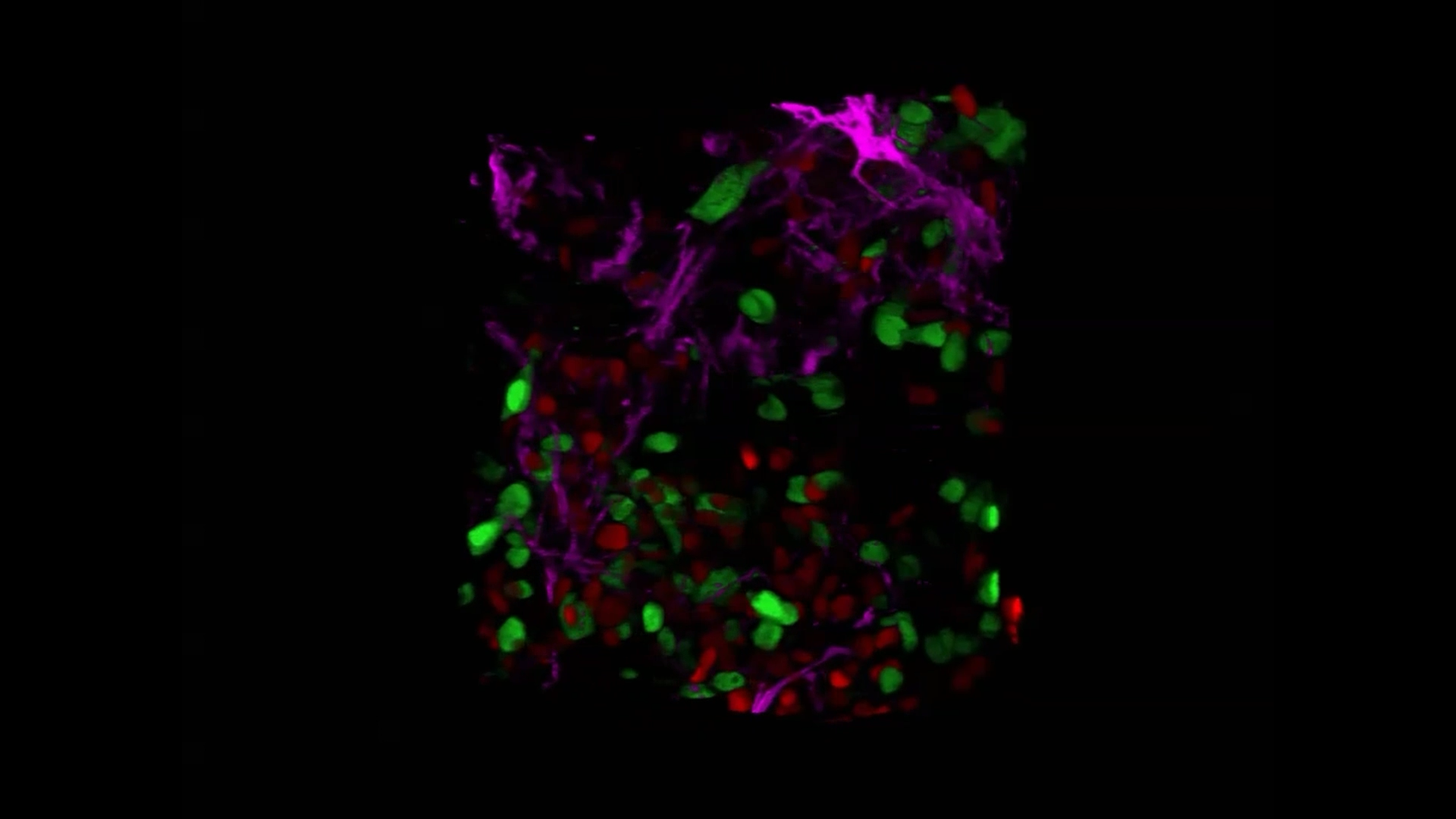
Using world-first, custom-built technology within its microscopy centre – INCITe is allowing researchers to study real-time interactions between the immune system and cancer for the very first time.
Why your support through ACRF has been vital
“Before ACRF INCITe, imaging the immune system at the molecular level was too hard due to the speed of immune cells. Now with our new custom-built setup, we can go 5x faster and 5x deeper and this opens up many new exciting opportunities for cancer immunotherapy.”
INCITe has already had significant impact
The INCITe Centre has continued to grow as a leading force in intravital microscopy in Australia.
Beyond their established expertise in imaging mammary glands (breast cancer), pancreas (pancreatic cancer), liver (metastasis), lymph nodes (immune response), skin (melanoma and immune response), and muscle (metabolic processes), they have extended into new areas. This includes:
- Lungs, to visualize metastasis and immune responses
- Brain, to visualize metastasis
- Tongue, enabling head and neck cancer investigations
- Eye, to study corneal alterations
These advancements enhance their ability to observe disease processes in real time, significantly contributing to biomedical research and translational applications.
Already, new treatments are entering clinical trials, thanks to INCITe.