Australian Cancer Research Foundation 2025 Grant Awards
Transforming cancer research for over 40 Years
Australian Cancer Research Foundation (ACRF) has been at the forefront of transformative cancer research since 1984. The $200 million invested to date has multiplied into significant outcomes with ongoing impact.
Our 2025 grant awards highlight some of the boldest, most innovative cancer research in Australia. We are excited to support these brilliant ideas with game-changing technology that will accelerate research outcomes and help prevent, detect, or treat cancer.
We thank our supporters for helping us back these brilliant research programs and look forward to sharing their progress and future impact.
The 2025 Grant Awards support some of the most innovative projects in Australia

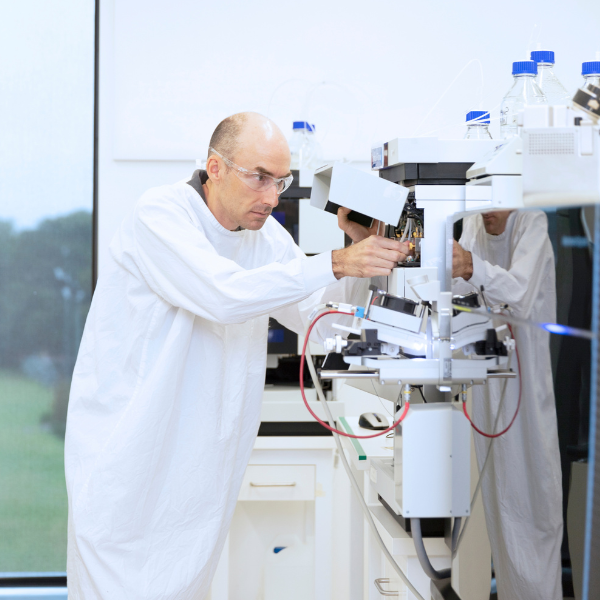
The ACRF Centre for Mass spectrometry Analysis of Tumour Response In compleX microenvironments
$2.5 million awarded to Garvan Institute of Medical Research

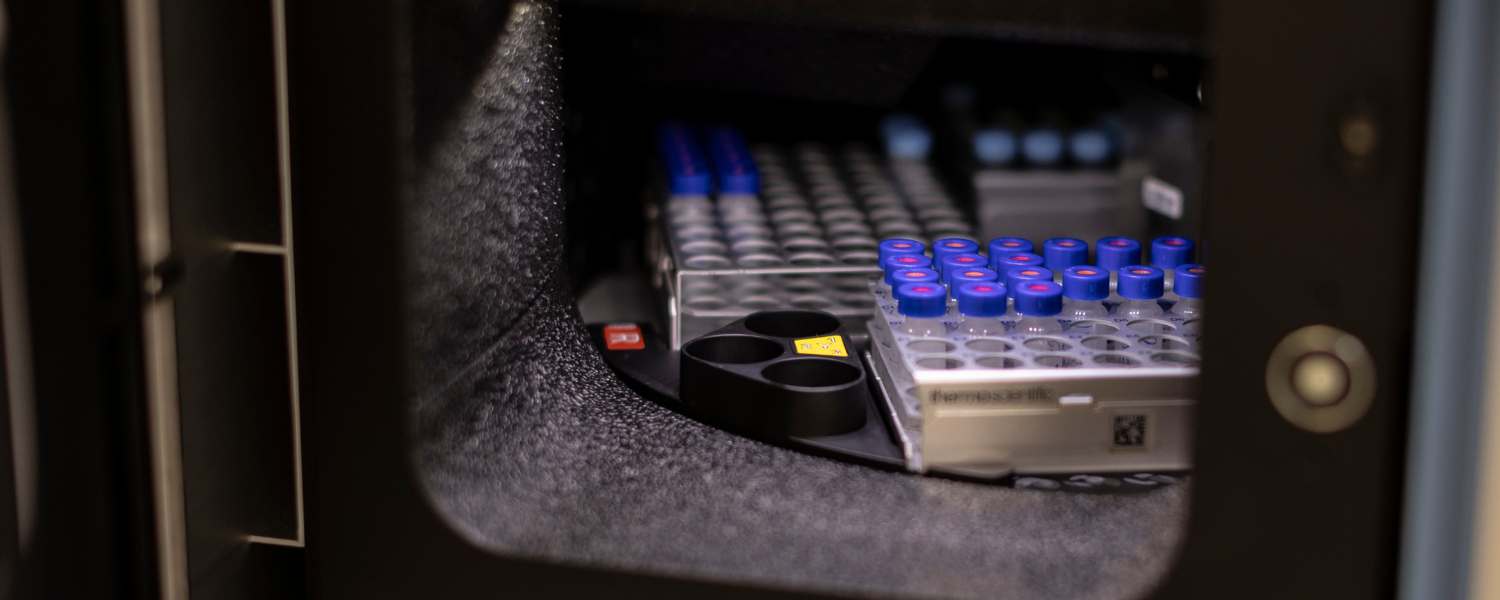
ACRF Single Cell Cancer Proteomics Laboratory
$1.8 million awarded to The University of Sydney

ACRF Centre for High-Risk Breast Cancer
$2.5 million awarded to researchers at Princess Alexandra Hospital and Griffith University

ACRF BRAIINSTORM Program
$2.5 million awarded to WEHI
The ACRF Centre for Mass spectrometry Analysis of Tumour Response In compleX microenvironments (MATRIX)
ACRF MATRIX will revolutionise our ability to investigate why some cancers resist treatment and spread to other organs.
While most cancer research focuses on tumour cells themselves; this centre is investigating the 'neighbourhood' the cancer cells live in – the tumour microenvironment (TME). This includes scaffolding proteins and supporting structures that surround cancer cells and influence their growth and response (or lack of) to treatment.
This will be Australia's first dedicated centre for ultra-high-resolution spatial proteomics in cancer and fundamental biological insights often follow technological breakthroughs. ACRF MATRIX will allow researchers to visualise how the TME changes during chemotherapy or immunotherapy and drives metastatic spread, revealing why some tumours become resistant and others respond—and why secondary cancers often behave so differently from the original tumour.
These discoveries will help drive the development of new combination therapies that target both cancer cells and their supporting microenvironment simultaneously, to improve survival across multiple cancer types.
ACRF Single Cell Cancer Proteomics Laboratory
ACRF Single Cell Cancer Proteomics Laboratory will be Australia’s first, dedicated single-cell cancer proteomics laboratory, establishing a national platform.
Until now, researchers have studied cancer by looking at many thousands of cells at once. This revolutionary new laboratory will allow scientists to examine the proteins inside individual cancer cells, and the other normal cells around them. These basic discoveries could lead to improved precision medicine, so oncologists can make the best treatment choice for individual patients and could help researchers understand why some immunotherapies (e.g. CAR T-cells) don’t work for all patients.
Access to this new technology in research will be like installing a brighter lamppost on a dark street—revealing entire pathways we didn’t know existed.
The ability to analyse proteins from individual cancer cells and cancer-associated cells is incredibly unique and only through significant technology development has this capability been unlocked. Discoveries will benefit research around the world.
ACRF Centre for High-Risk Breast Cancer
ACRF funding will provide a world leading magnetic resonance (MR) scanner that can detect warning chemical changes in breast tissue years before cancer appears.
For the thousands of Australian women at high genetic risk of breast cancer, this breakthrough technology has the potential to act as a real-time risk predictor: helping to identify exactly who may be susceptible and who may safely avoid preventative surgery or strong medication. The non-invasive, contrast-free scan could also offer an alternative for measuring breast density in women who may not be able to tolerate standard contrast agents.
The centre will run national clinical trials for best managing women at risk for breast cancer. The goal is to make this lifesaving early-detection system available across Australia and internationally. Scans will also be offered to patients to assess the risk of ovarian cancer.
ACRF BRAIINSTORM Program
BRAIINSTORM stands for BRinging AI and Immunotherapy for Neuro-oncology together, using Screening, Therapies and Omics-based Research Models.
This landmark end-to-end translational pipeline will accelerate development of personalised drugs and cell therapies for high-grade gliomas, including diffuse intrinsic pontine glioma (DIPG), the leading cause of childhood cancer death, and glioblastoma in adults, which remains largely incurable and claims 65% of all brain cancer deaths.
A new, dedicated clean room for agile, point-of-care cell therapy manufacturing, will enable affordable and timely delivery of novel treatments to Australian brain cancer patients. This could improve patient outcomes for this notoriously difficult-to-treat cancer, accelerating discovery to first-time-in-human clinical trials.