New clinical trials to target pancreatic cancer’s protective shield
A multicentre Australian study will combine chemotherapy with drugs that weaken the barrier around pancreatic cancer.
Two new clinical trials led by the Garvan Institute of Medical Research will test whether targeting the dense, fibrous tissue surrounding pancreatic tumours could make one of Australia's deadliest cancers more vulnerable to treatment. The trials, which have been funded by the Medical Research Future Fund, are expected to begin recruiting patients with metastatic pancreatic cancer in mid-2026. Their approach could also inform strategies for other cancers characterised by fibrous barriers, including certain breast, liver and lung cancers.
“Pancreatic cancer builds a fortress of scar-like tissue around itself that acts like armour, blocking drugs and immune cells from reaching the tumour cells,” says Professor Marina Pajic, Snow Medical Fellow and Lab Head at Garvan, who has been awarded funding to lead a multidisciplinary team delivering the trials. “We’ve identified ways to weaken this protective barrier that have shown remarkable results in laboratory models, and now we’re ready to test these approaches in patients with advanced disease.”
The four-year collaborative study, funded through the Medical Research Future Fund’s Clinical Trials Activity scheme, involves major cancer centres across NSW including Westmead Hospital, St Vincent’s Hospital Sydney and Wollongong Hospital, along with pharmaceutical partners Syntara and RedX Pharma.
“Garvan has built one of Australia’s strongest pancreatic cancer research programs, with multiple teams working synergistically on this deadly disease,” says Professor Benjamin Kile, Executive Director of the Garvan Institute. “With both leading scientific expertise and cutting-edge infrastructure, we’re accelerating the translation of lab discoveries into potential treatments for patients.”
Breaking down the barrier
Pancreatic ductal adenocarcinoma, the most common form of pancreatic cancer, remains one of medicine’s most formidable challenges, with five-year survival rates below 13 per cent. The fibrous tissue, or stroma, that characterises these tumours not only blocks drug delivery, but also promotes tumour growth and spread while preventing the immune system from attacking and removing the cancerous cells. The early phase trials will test two different approaches to dismantling these defences, marking the first time these specific stromal-targeting strategies will be tested in the clinic for pancreatic cancer.
The first approach targets an enzyme called ROCK (Rho-associated kinase), which helps create the rigid scaffolding around tumours. The second blocks LOXes (lysyl oxidases), enzymes that cross-link fibres in the tumour environment, making them tough and impenetrable. Patients will receive either the ROCK inhibitor (zelasudil) or the LOX inhibitor (amsulostat), combined with chemotherapies currently used as frontline treatment for metastatic disease.
Precision medicine approach
While testing treatment safety and effectiveness, the trials will conduct deep analysis of patient samples to understand exactly how these drugs work and who they work best for. Researchers will examine tumour biopsies before and during treatment, looking for specific genetic and molecular patterns that correlate with how well patients respond. Blood samples collected throughout the trial will reveal how tumours change over time and whether they develop resistance to treatment.
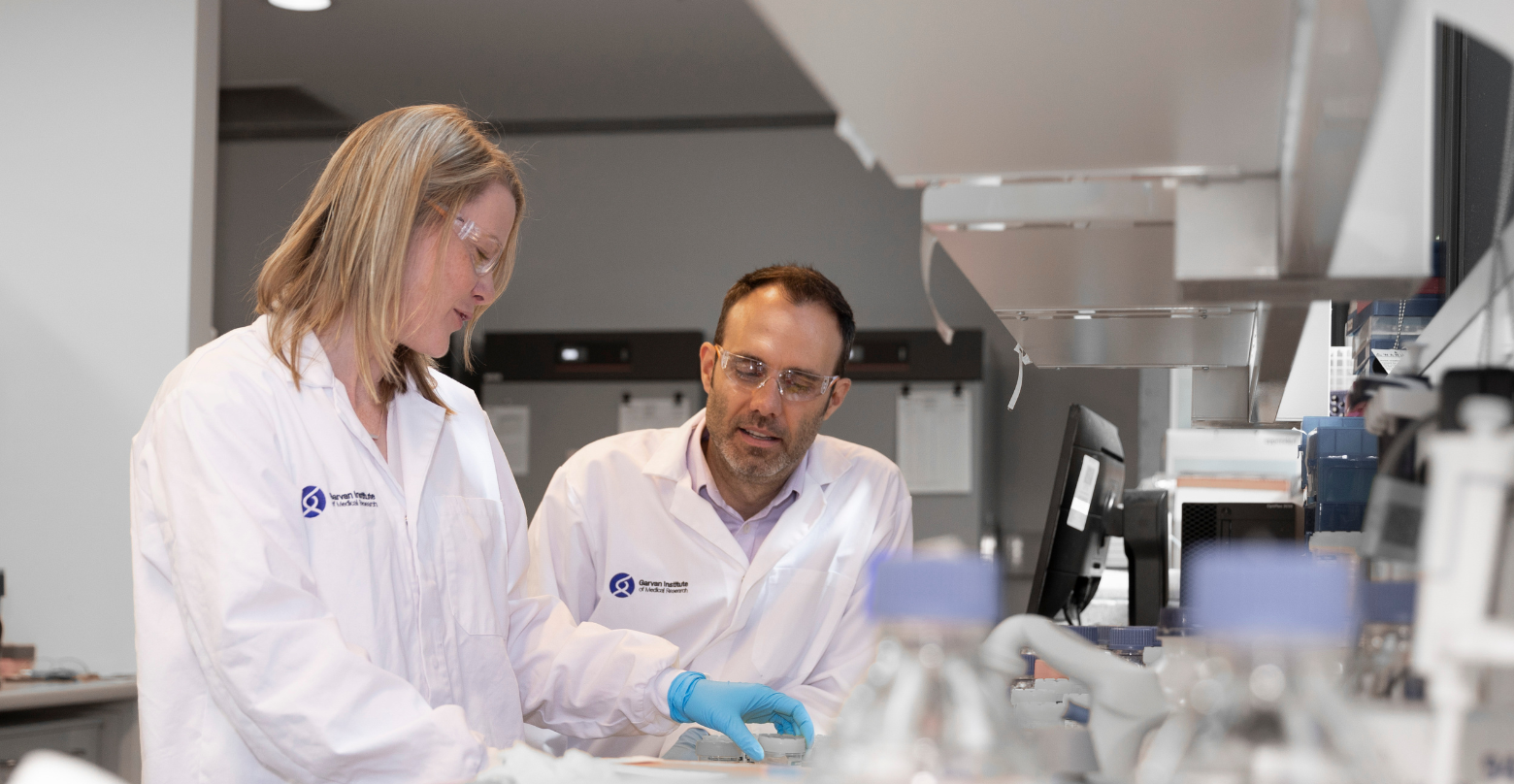
Key to this analysis will be advanced imaging capabilities at Garvan, including spatial transcriptomics technology that maps gene activity in individual cells while preserving their location within biopsy samples. The study will leverage the institute’s new ACRF MATRIX Centre for ultra-high-resolution spatial proteomics – the mapping of proteins within samples. “Being able to use state-of-the-art platforms as part of these trials will allow us to really dig deep into the biology of pancreatic cancer and map how tumours are responding to these novel therapies,” says Professor Thomas Cox, lead of the new Centre at Garvan and co-investigator of the trials.
“By analysing how different patients’ tumours respond to these treatments at the molecular level, we can then identify so-called ‘signatures’ that predict therapy success,” says Professor Pajic. “In future, this knowledge will help us personalise the treatment strategy based on each tumour’s unique characteristics.”
While the trials are not yet enrolling participants, information about pancreatic cancer clinical trials currently available in Australia can be found through the Australian New Zealand Clinical Trials Registry.
Professor Marina Pajic is a Conjoint Professor at St Vincent's Clinical School, Faculty of Medicine and Health, UNSW Sydney. Professor Thomas Cox is a Conjoint Professor at St Vincent's Clinical School, Faculty of Medicine and Health, UNSW Sydney.
Article sourced from the Garvan Institute of Medical Research. Original article can be found here.
Related news
Read more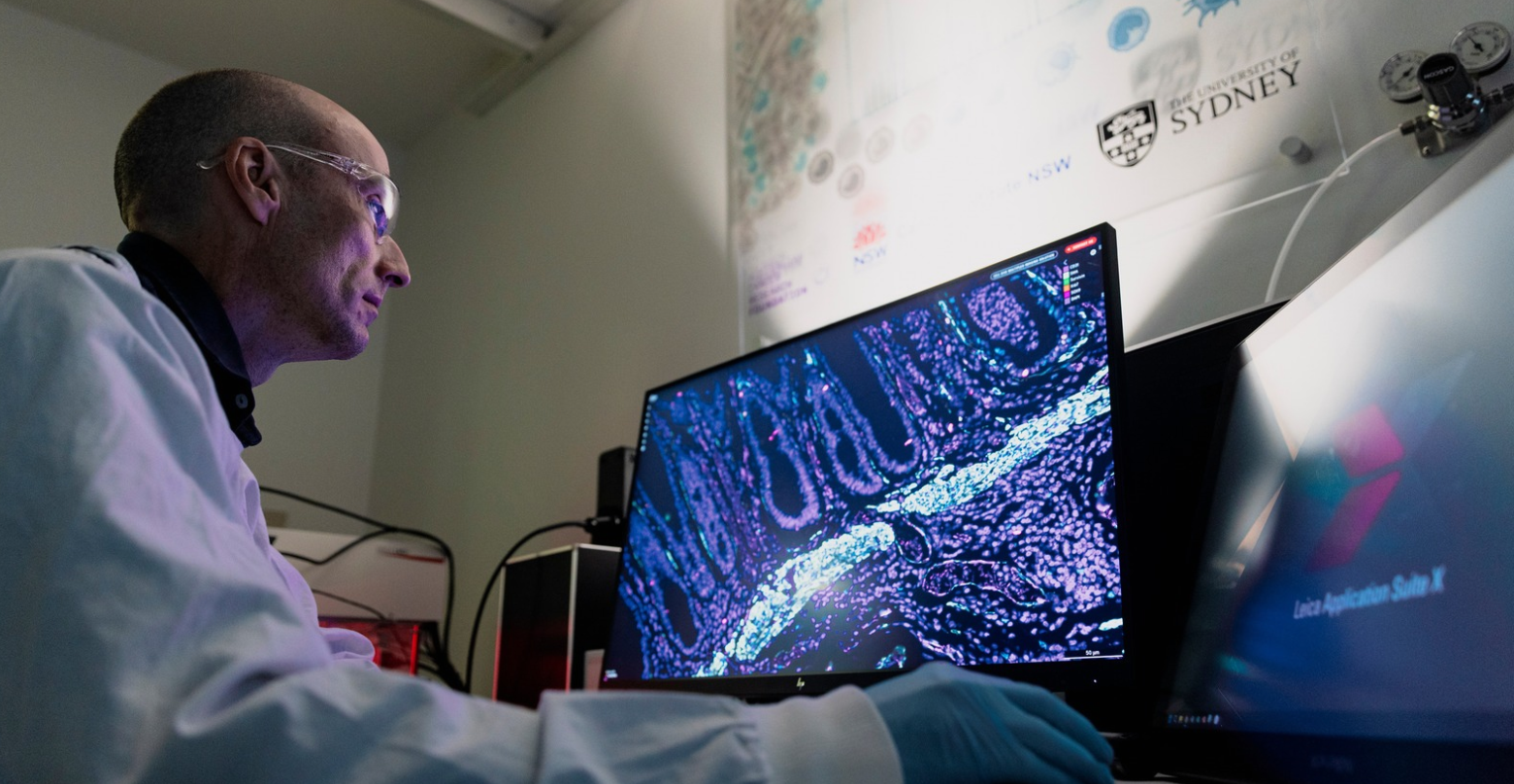
University of Sydney launches Australia’s new ace against cancer
Research offers new hope for people living with rare blood cancers